



Charting the next chapter of China–EU business in the age of AI
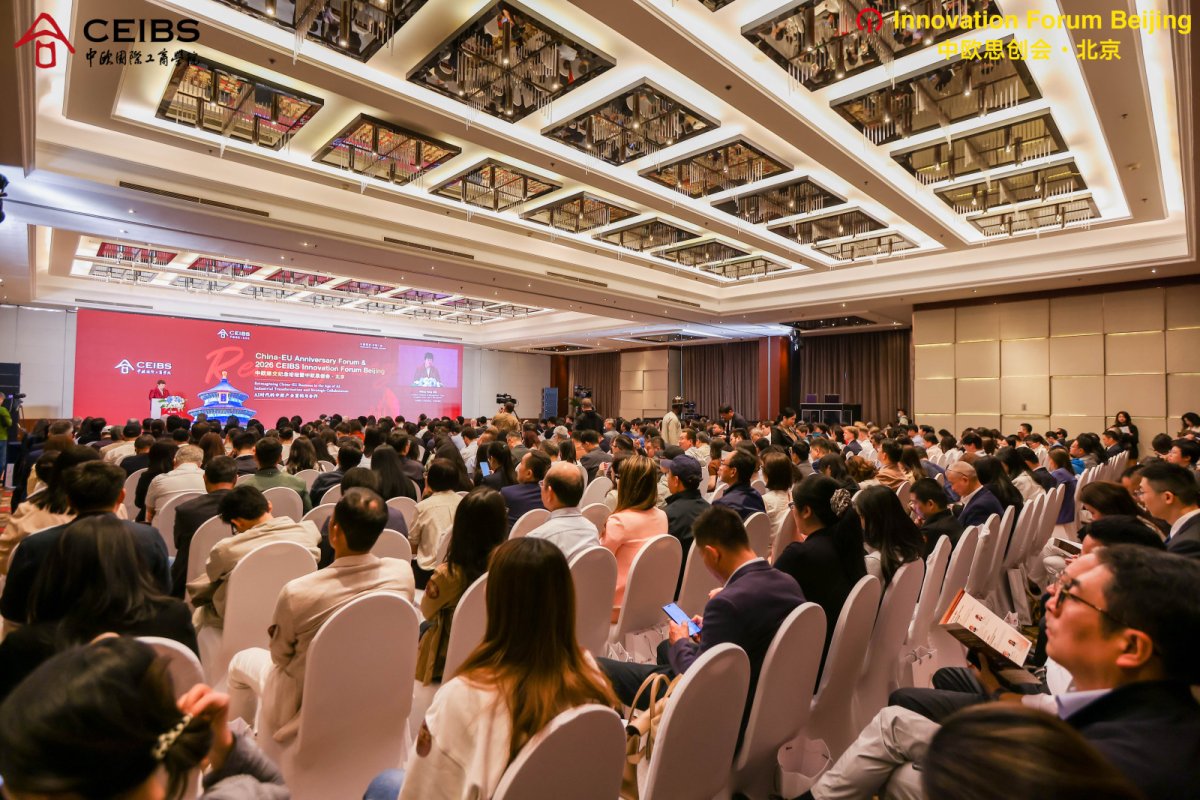
May 8, 2026. Beijing— As China and the European Union enter a new era of diplomatic relations, China Europe International Business School (CEIBS) today hosted the China–EU Anniversary & 2026 CEIBS Innovation Forum in Beijing. Bringing together over 500 senior leaders from government, business, and academia, the forum explored the future of China–EU business cooperation in the age of artificial intelligence under the theme “Reimagining China–EU Business in the Age of AI: Industrial Transformation and Strategic Collaboration”.
Jointly founded by the European Union and the Chinese government, CEIBS convened the forum at a significant moment for EU-China relations. Following the 50th anniversary of EU–China diplomatic ties in 2025, the event took place against the backdrop of an economic relationship that remains substantial, yet increasingly complex. Businesses on both sides are adapting to regulatory change, geopolitical uncertainty, and supply-chain realignment, while advances in artificial intelligence and green technologies are creating new opportunities for collaboration and growth.
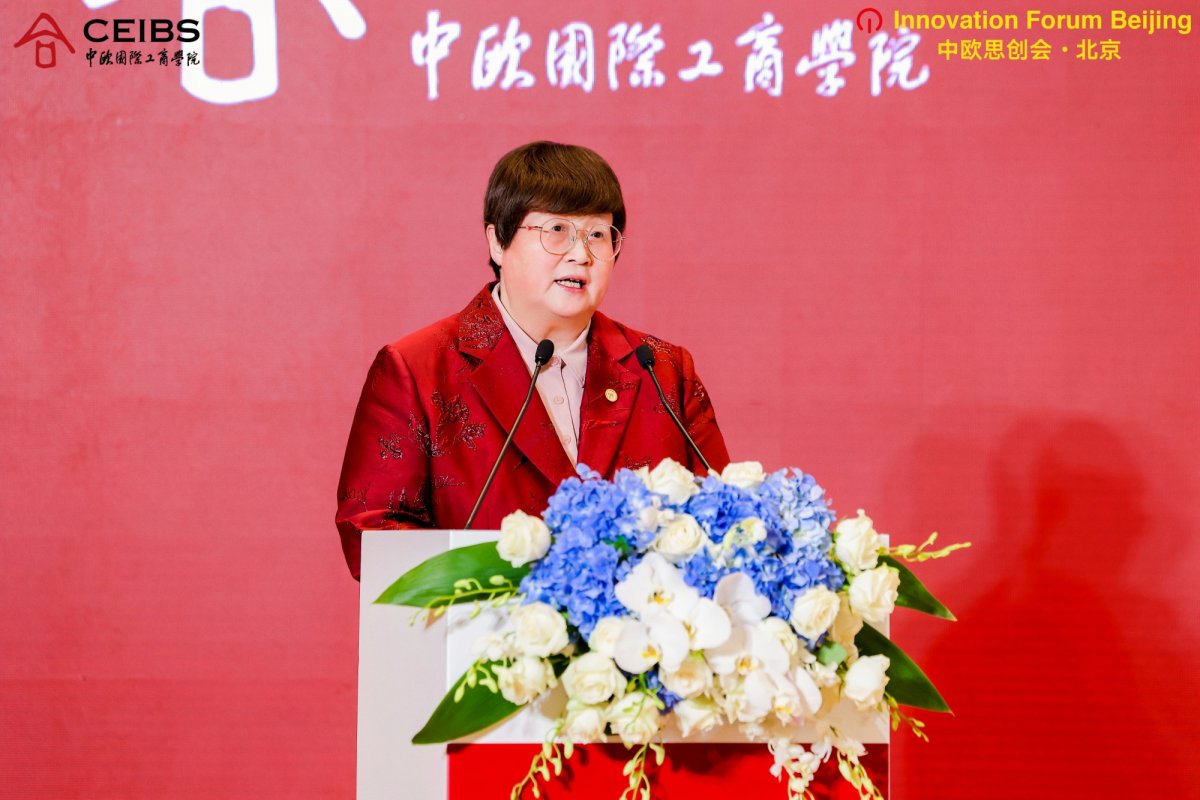
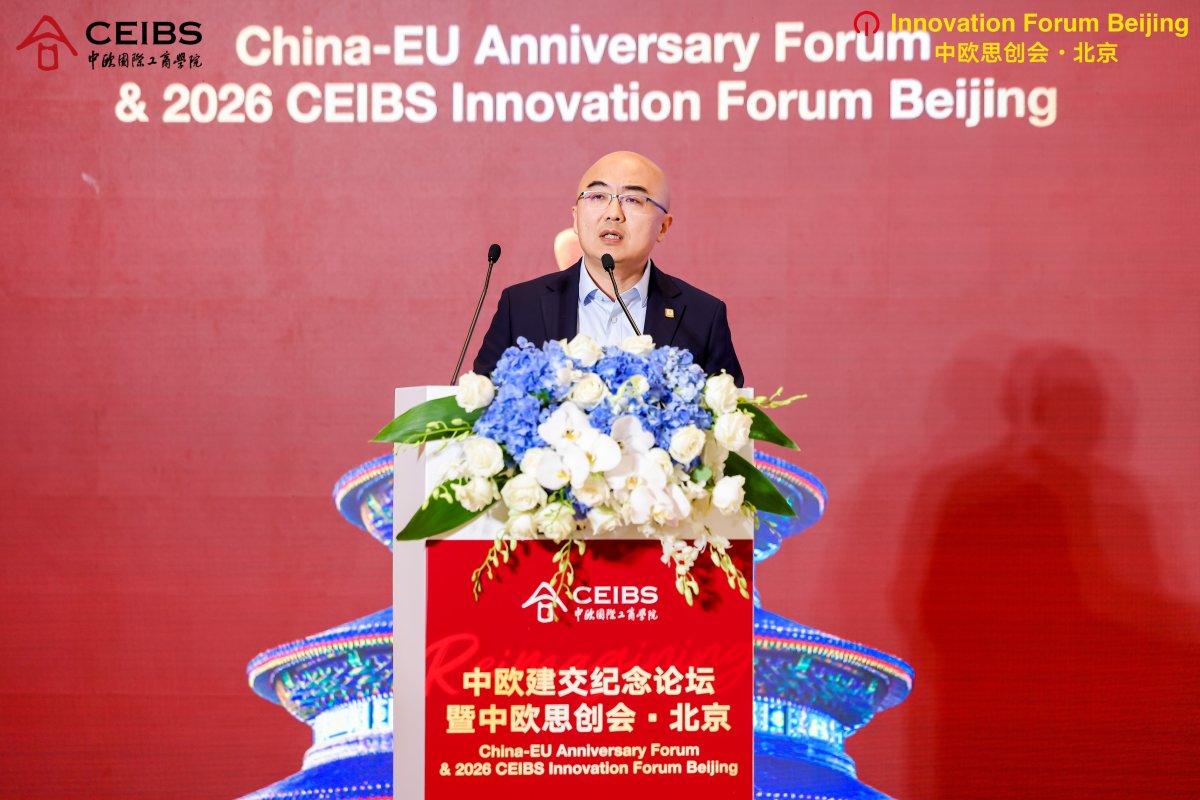
In a welcome address, CEIBS President Wang Hong emphasised that 2026 marks the beginning of a “new half-century” in China–EU relations. Since the start of the year, she noted, multiple European leaders have visited China; China’s exports to the European Union, meanwhile, rose 18% in the first quarter. European enterprises have also made a notable contribution to newly registered foreign invested companies in China in 2026. These high frequency, high level interactions, she said, send a clear signal that both China and Europe share a commitment to openness and cooperation.
President Wang went on to point out that amid the profound impact of artificial intelligence on the global economic landscape and the accelerated restructuring of global industrial and supply chains, China and Europe face a new set of strategic challenges, including industrial integration, two-way corporate expansion, and navigating evolving regulatory systems.
She then further underscored CEIBS’ longstanding role as a bridge between China and Europe. With campuses across three continents and a global alumni network spanning more than 90 countries and regions, the school continues to foster cross-border dialogue and leadership, she said. “As China enters the opening year of its 15th Five Year Plan, CEIBS has launched a new development strategy centred on an ‘AI + HI’ (Artificial Intelligence + Human Intelligence) dual driven model that integrates artificial intelligence across teaching, research and management,” President Wang explained.
“Openness and cooperation are the only viable paths to effectively addressing global challenges,” President Wang concluded. “CEIBS will continue to serve as a bridge for China–EU exchange, contributing wisdom and strength to the steady advancement of bilateral relations and to building a global community with a shared future.”
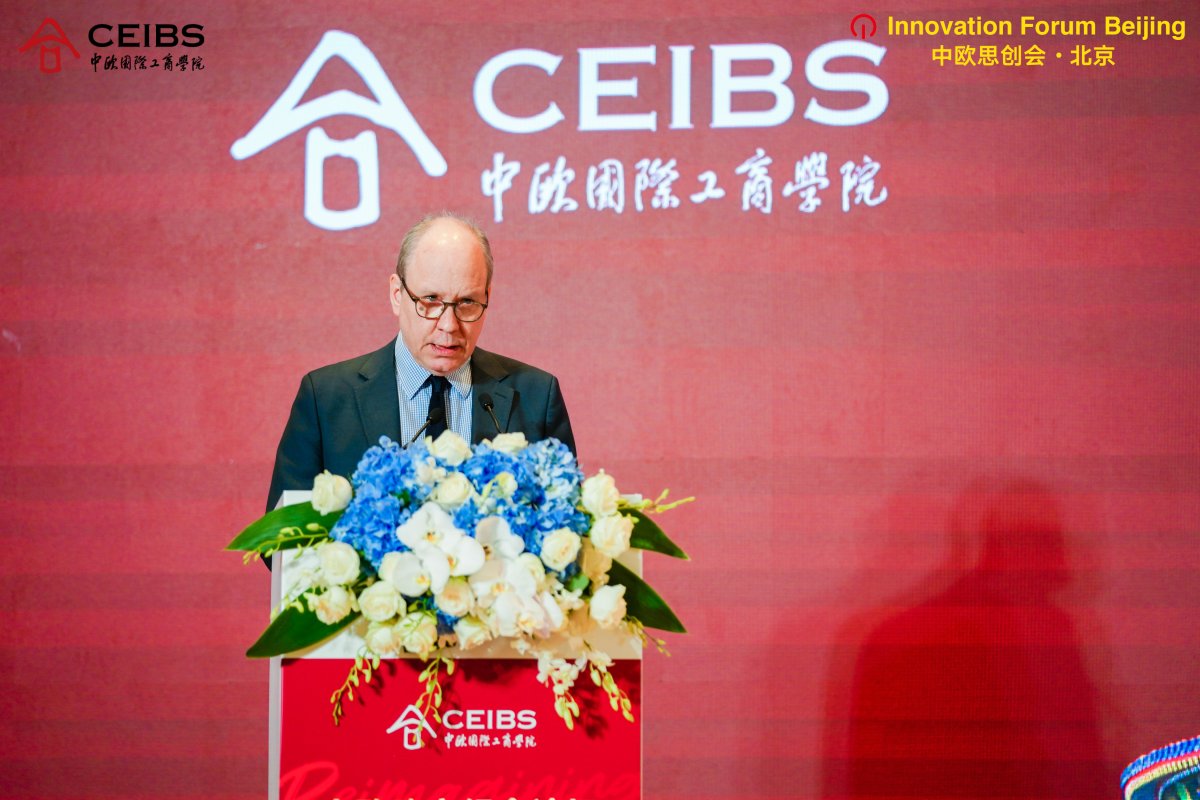
Delivering opening remarks, Mattias Lentz, Deputy Head of the Delegation of the European Union to China, reflected on the rapid growth of EU–China economic ties over the past five decades. Since the establishment of diplomatic relations more than 50 years ago, he said, EU–China trade has expanded more than 300-fold, creating one of the world’s most dynamic economic partnerships.
He went on to praise the adaptability and long-term commitment of European businesses in China, particularly their efforts in localisation, R&D, and partnership building, while acknowledging ongoing challenges related to market access, regulation, data governance, and intellectual property protection. “European businesses have embraced localisation not simply as a business strategy, but as a necessary response to China’s unique and evolving market,” he said.
Looking ahead, Mr. Lentz reaffirmed the European Union’s support for open markets, fair competition, and rules-based trade. “The next fifty years of EU–China relations will be defined by how we turn challenges into collaboration,” he said. “The key is to work together to create an environment where adaptation becomes an opportunity, not an obstacle.”
Concluding his remarks, Mr. Lentz called on leaders in both the business and academic spheres to work to strengthen trust, align interests, and continue building a resilient and mutually beneficial EU-China economic partnership for the decades ahead.
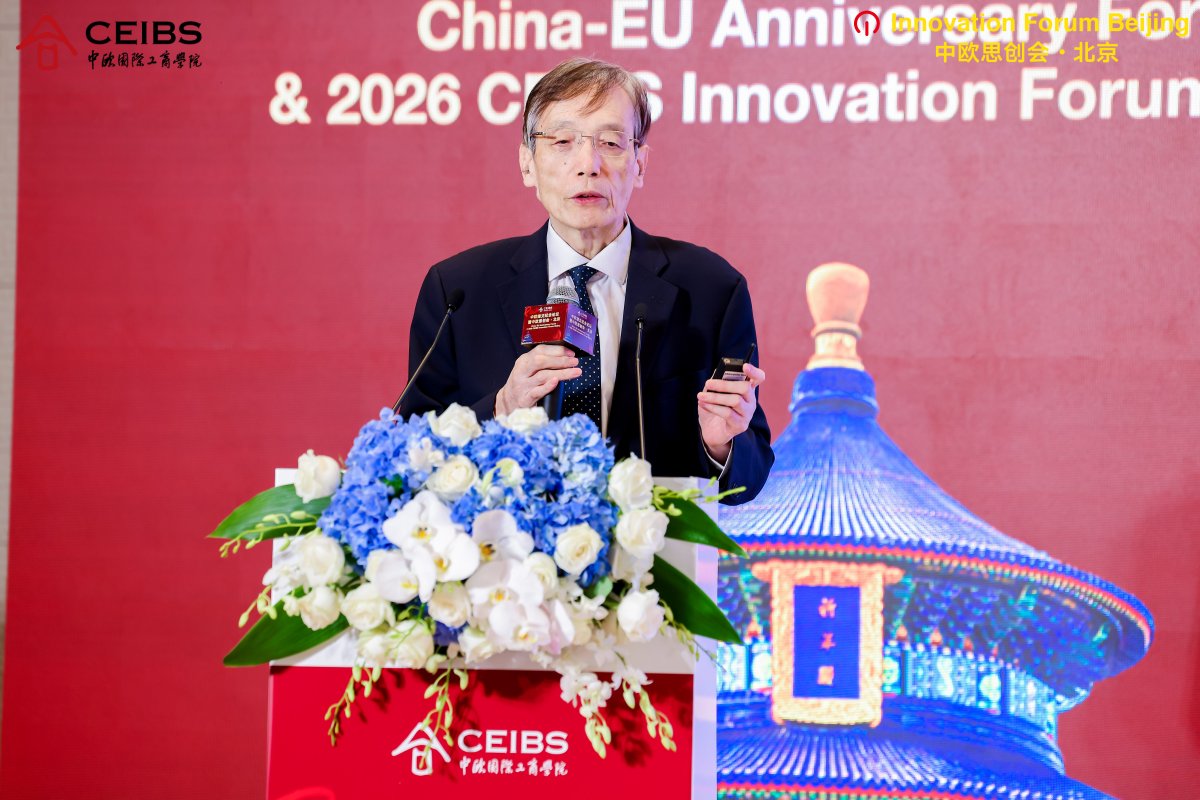
In the event’s first keynote speech, Liu Shijin, Former Deputy Director of the Development Research Centre of China's State Council and Vice-Chairman of China Development Research Foundation shared insights on China’s economic outlook and the strategic priorities of the country’s recently announced 15th Five-Year Plan. Mr. Liu argued that China’s economy is undergoing a fundamental transition from a supply-constrained model to a demand-constrained one. While technological innovation and industrial upgrading remain important, he noted that insufficient domestic consumption has emerged as a key structural challenge for long-term growth. He pointed out that household consumption as a share of GDP remains significantly below global averages, with particularly strong unmet demand in areas such as education, healthcare, elderly care, social security, and affordable housing. To explain this shift, Mr. Liu introduced the concept of “end-demand,” combining consumer spending with non-productive investment linked to public welfare and quality of life. “In previous decades, rapid growth in infrastructure and real estate helped mask structural weaknesses in consumption,” he said. “As those sectors slow, however, expanding domestic demand is becoming essential to sustaining economic momentum.”
Mr. Liu also proposed a framework distinguishing the “height” and “breadth” of economic growth. “Height” refers to gains in productivity driven by technological innovation, while “breadth” reflects how widely purchasing power and economic opportunity are distributed across society. He noted that breakthroughs in areas such as AI and robotics may strengthen productivity but could also intensify pressures on employment and income distribution if consumption and social inclusion do not keep pace.
Looking ahead to the coming 15th Five-Year Plan period, Mr. Liu argued that China’s growth model must gradually shift from being driven primarily by investment and exports toward one powered by innovation and consumption. He concluded by calling for greater emphasis on human capital, consumption upgrading, and financial market development, alongside continued industrial modernisation.
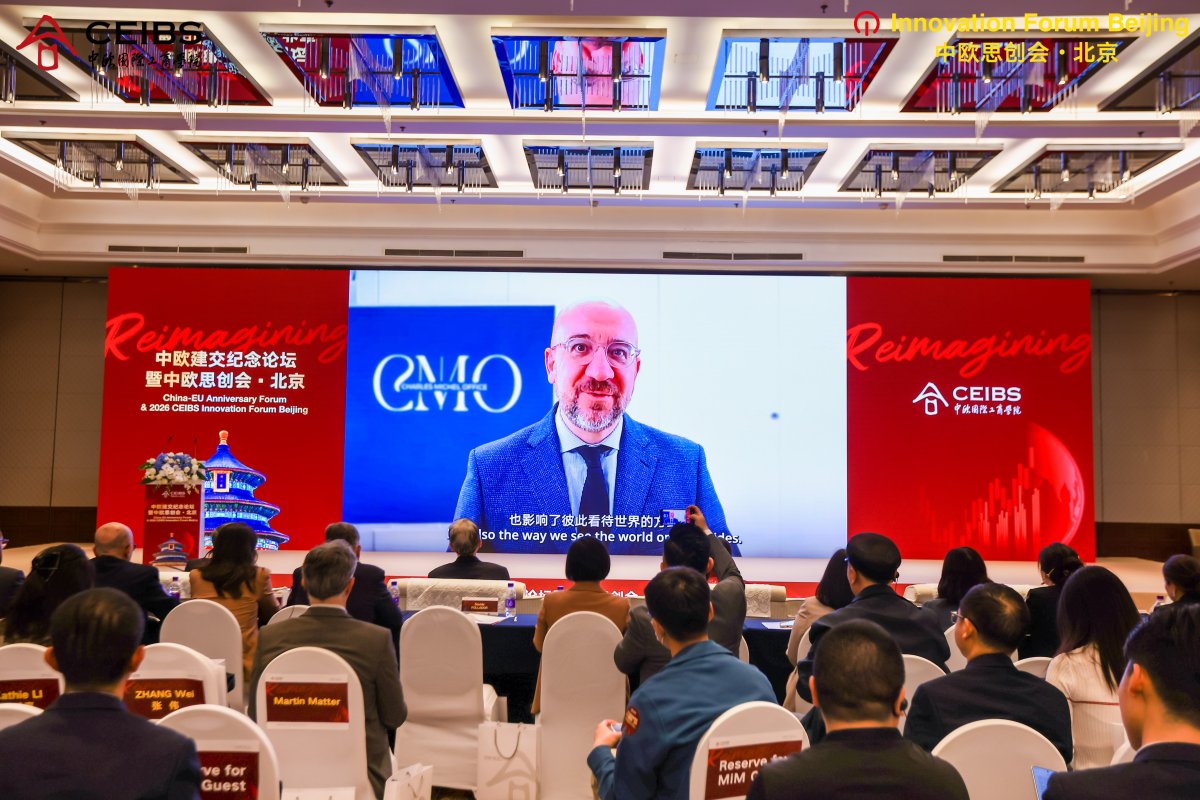
In a keynote speech delivered via video, Charles Michel, CEIBS Distinguished Professor, former President of the European Council, and former Prime Minister of Belgium, delivered his insights on “Building Consensus on China–EU Cooperation in the Age of AI.”
In his remarks, Prof. Michel described the current moment as a fundamental turning point in the global system. “We’re entering a new phase where the question is no longer only how much we cooperate, but how we cooperate, under which conditions, and how we define a shared vision of a common global future,” he said.
He argued that the post World War II global order, once grounded in assumptions that globalisation and economic interdependence would foster stability, is giving way to a more fragmented and uncertain world marked by technological competition, supply chain reconfiguration and heightened security concerns.
Against this backdrop, Prof. Michel identified artificial intelligence as a defining force of the era. “Artificial intelligence is not just another technological upgrade; it is reshaping the foundations of our societies,” he said. “These are not reasons to slow down, but reasons to govern better,” he said.
He highlighted that despite differences in political systems, histories, and regulatory approaches, the EU and China share a responsibility to engage in meaningful dialogue on AI. He outlined four principles for effective bilateral cooperation in the AI era: active listening, respect for differences, a focus on tangible outcomes, and acting at the right speed. “The goal is not convergence for its own sake, but to engage where it is possible while maintaining the ability to diverge where it is necessary.”
Looking ahead, Prof. Michel stressed that the next phase of China–EU relations must move beyond one of scale driven primarily by trade volume to one defined by a shared commitment to “added value”, which he defined as stability, resilience, predictability, reciprocity, and a level playing field. “The future will not be built by countries that only protect themselves from each other, but by those mature enough to manage differences responsibly, protect their legitimate and sovereign interests, and cooperate where cooperation creates value,” he concluded.
This was followed by a third keynote speech delivered by CEIBS Professor of Economics and bestselling author of How China Works Lan Xiaohuan, on the topic of “The Industrial Frontier of AI”. He argued that data, not just algorithms or computing power, will increasingly determine industrial structure, economic power, and competitive advantage in the AI era. “When AI is everywhere, data decides profit, structure, and power,” he noted.
Drawing comparisons between the United States and China, Prof. Lan explained how AI ecosystems are evolving around distinct data architectures. In the US, access to high-quality training data is increasingly secured through costly bilateral agreements, while in China, major technology platforms are building proprietary data ecosystems through integrated ownership structures, he argued.
His presentation further identified five emerging ways of understanding data: as oil (a raw material resource), labour (a process), human capital (a worker), commons (an information source), and land (a state-held, operator-processed, and market-driven asset). He argued that these competing frameworks will shape future debates around regulation, ownership, public infrastructure, and economic governance in the AI era.
Prof. Lan pointed out that while the short-term bottlenecks in AI development remain computing power, chips, and foundation models, the long-term challenge lies in governance as AI expands into increasingly complex real-world scenarios involving broader segments of society. “How we understand data will fundamentally determine how we understand the future of AI,” he concluded.
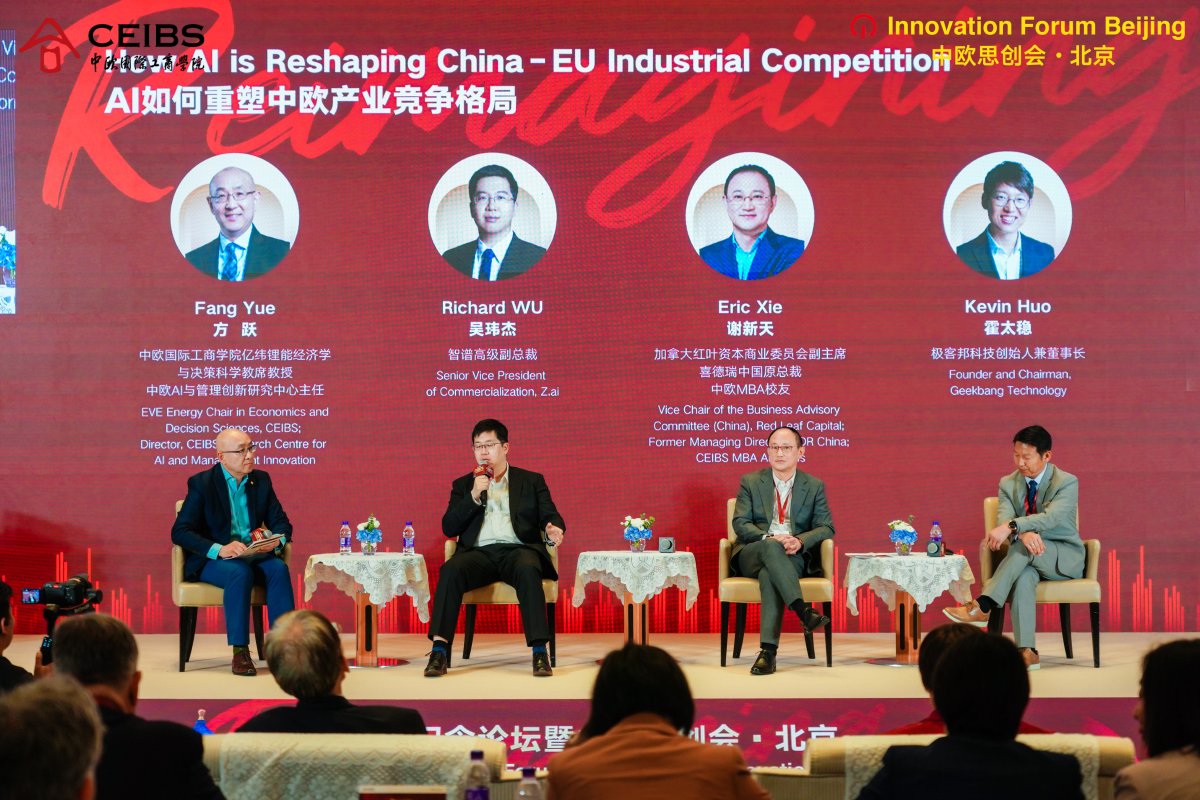
The forum then proceeded to a panel discussion moderated by CEIBS EVE Energy Chair in Economics and Decision Sciences and Director of CEIBS Research Centre for AI and Management Innovation Professor Fang Yue, focusing on the theme “How AI is Reshaping China–EU Industrial Competition”. The panellists were Richard Wu, Senior Vice President of Commercialisation of Z.ai; Eric Xie, Vice Chair of the Business Advisory Committee (China) of Red Leaf Capital, Former Managing Director of BDR China, and CEIBS MBA alumnus; and Kevin Huo, Founder and Chairman of Geekbang Technology.
Prof. Fang noted that previous technological waves such as the arrival of the internet and mobile internet primarily improved productivity through greater efficiency, lower costs, and faster operations. By contrast, he argued, the defining shift driven by AI is its growing role in reshaping labour structures. “AI is no longer just a tool that empowers workers; it is increasingly becoming part of the workforce itself, participating in both decision-making and execution,” he said.
Throughout the discussion, the panellists highlighted that China and Europe bring complementary strengths to AI development, with China emphasising speed and agility, and Europe focusing more on ethics and safety. Despite growing competition, the speakers stressed that both sides face common challenges in AI governance and should pursue greater cooperation to translate technological advances into sustainable business value.
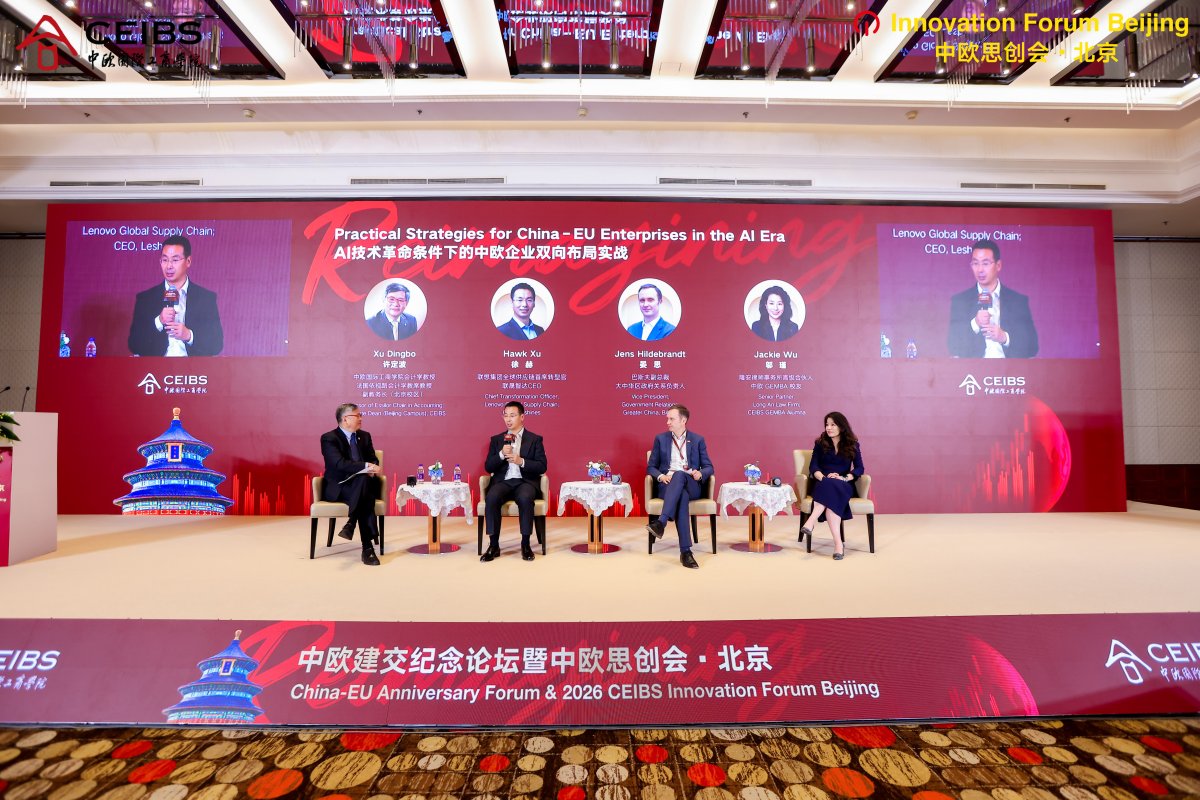
A second panel discussion was moderated by CEIBS Essilor Chair in Accounting Xu Dingbo on the topic of “Practical Strategies for China–EU Enterprises in the AI Era”. The panellists were Hawk Xu, Chief Transformation Officer of Lenovo Global Supply Chain and CEO of Leshines; Jens Hildebrandt, Vice President, Government Relations, Greater China of BASF; and Jackie Wu, Senior Partner of Long An Law Firm and CEIBS Global EMBA alumna.
Prof. Xu noted that the pace of AI development has far exceeded expectations, bringing with it both efficiency gains and growing uncertainty. He argued that amid global volatility, particularly in the United States, cooperation between Europe and China remains essential.
Together, the panellists articulated a belief that trust must be the foundation of successful AI-enabled organisations and ecosystems, and must underpin data sharing, supply chain collaboration, and cross-border cooperation. In terms of leadership and management transformation, each highlighted that future leaders must develop AI literacy and understand technological, regulatory, and cultural differences, concluding that the future will belong to leaders that possess genuine empathy and humanity.
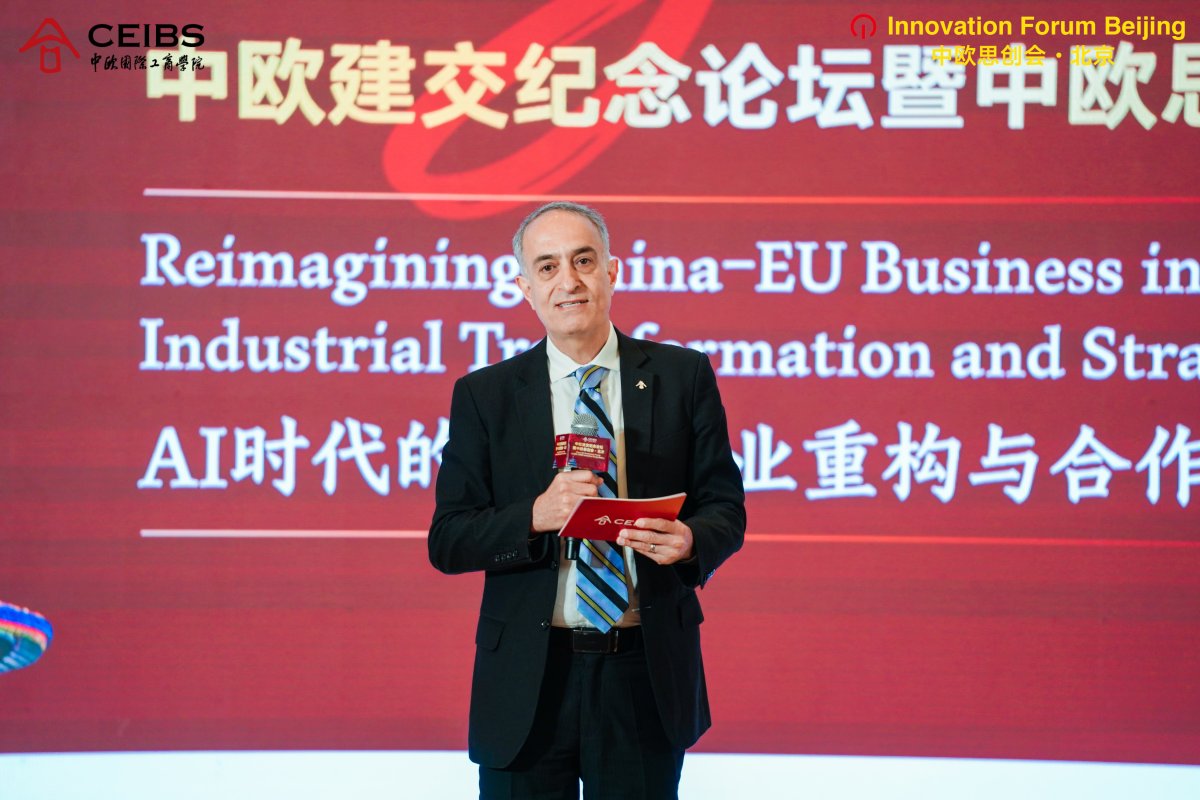
The forum was hosted by CEIBS Associate Professor of Management Practice and Deputy Director of Global MiM CEIBS (Switzerland)-ESCP Double Degree Programme Majid Ghorbani, who in his own remarks underscored the importance of dialogue in a shifting global landscape.
“Standing at a new historical juncture of China–EU relations, we kickstart the next fifty years of cooperation,” Prof. Ghorbani said. “In a geopolitical and business climate that is growing increasingly complex, facilitating open and respectful dialogue is more essential than ever.”
Professor Ghorbani also highlighted CEIBS’ role as a bridge between China and Europe. “As a truly international institution, we aim to provide a unique window into China’s business landscape for international business leaders, while bringing cutting-edge global insights to China’s enterprises,” he noted, adding that the forum reflects CEIBS’ long-standing commitment to integrating knowledge and practice through its Innovation Forum series.
The forum was organised by CEIBS, with support from the European Union Chamber of Commerce in China (EUCCC), Center for China & Globalization (CCG), CEIBS AIMI Research Centre, Geekbang, CEIBS Beijing Alumni Association, CEIBS Alumni Entrepreneurship Association, China-Britain Business Council, CCI FRANCE CHINE, China-Italy Chamber of Commerce, SwissCham China, Benelux Chamber of Commerce in China, Danish Chamber of Commerce in China, and FinnCham China.
About CEIBS Innovation Forum
The CEIBS Innovation Forum series was launched in 2015 and is committed to promoting the integration of knowledge and practice, while serving the transformation and development of business in China. The series provides insights into current business and economic trends with a focus on topics relevant to urban and regional development.
In 2026, the event will be held in Tianjin, Beijing, Wuxi, Hong Kong, Huizhou, Taizhou, Yantai, and Chongqing. By bringing ideas beyond the classroom and into the heart of industry, the event series aims to connect entrepreneurs, scholars, and local development ecosystems, helping businesses identify emerging trends, define their strategic direction, and achieve transformation in an increasingly fragmented and fast-changing world.